The five things that matter most when choosing a semantic layer for a modern data stack are use case compatibility, connectivity, security and governance, query performance management, and scalability. Get those right, and a semantic layer becomes the governed source of truth every AI model, BI tool, and copilot trusts. Here’s what that looks like in practice, starting with a data engineer who learned it the hard way.
Understanding the Challenge: A Day in the Life of a Data Engineer
Meet Alex, a data engineer at PrecisionWorks, a global manufacturer managing a large-scale enterprise data ecosystem. Every day, Alex battles:
- Data silos across CRM, ERP, and third-party systems
- Conflicting metrics leading to poor decisions
- Slow query performance hampering dashboards
Sound familiar? Whether you work with BI tools, AI applications, or data pipelines, these challenges are all too common.
Example: Quality Control sees a 2.5% defect rate in the ERP system, but the executive dashboard shows 1.8%. Trust in data erodes quickly when metrics aren’t consistent.
Exploring the Solution: The Case for a Semantic Layer
After months of firefighting, Alex begins researching solutions to unify PrecisionWorks’ data and streamline analytics. That’s when he comes across the concept of a semantic layer, a technology that bridges raw data and business insights, creating a governed single source of truth for all teams.
A semantic layer:
- Standardizes metrics for consistent business logic across data analytics tools
- Improves performance with query optimization and aggregation awareness
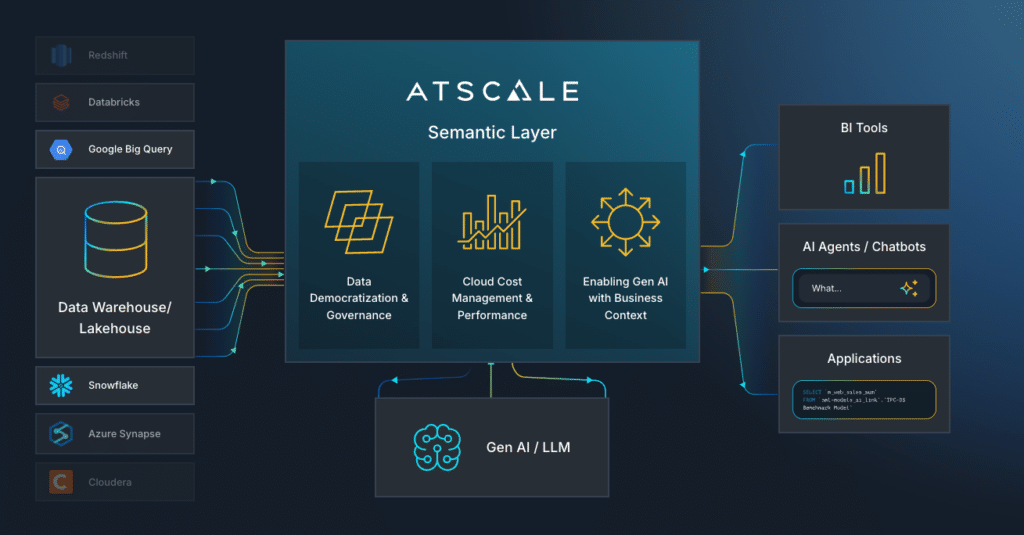
- Integrates data from systems like Snowflake, Databricks, and BigQuery
Why a Semantic Layer is Critical for AI and Analytics
Semantic layers are foundational for delivering trustworthy, explainable data to:
- BI dashboards (Power BI, Tableau, Excel)
- AI/ML models
- Natural Language Query (NLQ) interfaces
- LLMs (Large Language Models) and AI-powered copilots
But not all semantic layers are created equal. Here are the five key criteria to evaluate when selecting one.
1. Use Case Compatibility
A semantic layer should support a range of analytics workloads, including:
- Business intelligence (BI)
- Self-service analytics
- Machine learning pipelines
- LLM-based data exploration
Key Features to Look For:
- Compatibility with legacy systems and modern cloud platforms like Snowflake and Databricks.
- Ability to support BI, ad hoc queries, and AI-driven analytics.
Why it matters: With standardized logic, AI models can trust the same KPIs as business users—improving accuracy and transparency.
2. Connectivity
The semantic layer should integrate seamlessly with existing tools, ensuring data is accessible where users need it most.
Key Features to Look For:
- Native integration with analytics platforms (Power BI, Tableau, Excel) and SaaS applications (Databricks, Snowflake, Google Big Query).
- Support for API and SDK integrations for custom apps
- Compatibility with AI tools and LLM frameworks
Why it matters: Broad connectivity ensures your semantic layer becomes a central access point—not another silo.
3. Security and Governance
Data democratization must be balanced with security, protecting sensitive data.
Key Features to Look For:
- Row- and column-level security
- Centralized governance
- Role-based access control (RBAC) and Single Sign-On (SSO)
Why It Matters: Proper governance allows teams to explore data securely, empowering them without compromising compliance.
4. Query Performance Management
Slow analytics can cripple decision-making. A semantic layer must optimize query performance without burdening infrastructure.
Key Features to Look For:
- Query optimization for underlying platforms
- Aggregation awareness and caching
- Adaptive modeling for large-scale queries
Why It Matters: A high-performing semantic layer boosts adoption, reduces compute costs, and delivers real-time insights.
5. Scalability and Optimization
A semantic layer must grow with the organization, maintaining efficiency as data complexity increases.
Key Features to Look For:
- Elastic scaling for high concurrency
- Intelligent modeling tools that evolve with your data
- Optimization for hybrid cloud environments
Why It Matters: Choose a platform that can scale with your needs—so you’re set up for the long haul, not scrambling for a replacement down the line.
Making the Right Choice: Technical and Business Fit
For Alex, a semantic layer is no longer optional. It’s a necessity for enabling trusted analytics, AI-powered insights, and efficient data operations.
He’s now piloting solutions to ensure long-term alignment across technical capabilities and business objectives.
Five things: use case compatibility across BI, self-service analytics, ML pipelines, and LLM-based exploration; connectivity to your existing platforms and tools; security and governance like row- and column-level access and RBAC; query performance management; and scalability as your data grows.
Yes. A semantic layer should integrate natively with modern cloud platforms like Snowflake, Databricks, and Google BigQuery, alongside BI tools like Power BI, Tableau, and Excel.
Slow analytics undermine adoption. A semantic layer should optimize queries through aggregation awareness and caching, so performance holds up as usage and data volume grow.
Both. A semantic layer standardizes metrics for BI dashboards and also gives AI/ML models, natural language query interfaces, and LLM copilots the same governed definitions business users rely on.
Through row- and column-level security, centralized governance, and role-based access control with single sign-on, so teams can explore data freely without compromising compliance.
What’s Next in the Series
This is Part 1 of our 3-part series:
- Recognizing the need and evaluating a semantic layer
- Conducting a technical PoC and maximizing ROI
- Demonstrating business value and driving executive buy-in
Want the full framework? Download the Ultimate Guide to Choosing a Semantic Layer.


SHARE
Guide: How to Choose a Semantic Layer